Homeowners ask us for a price before anything else, and the honest answer is that a deck costs between $30 and $70 per square foot installed, with the town it stands in moving the number more than most people expect. This guide sets out the ranges we quote in each town we serve and the local reasons behind them.
Every figure below comes from our own quotes over the last two seasons. They cover a permitted deck with footings, framing, decking and code-compliant guards. Stairs, privacy screens, lighting and roofs are extra and are listed further down.
What Sets the Price of a Deck
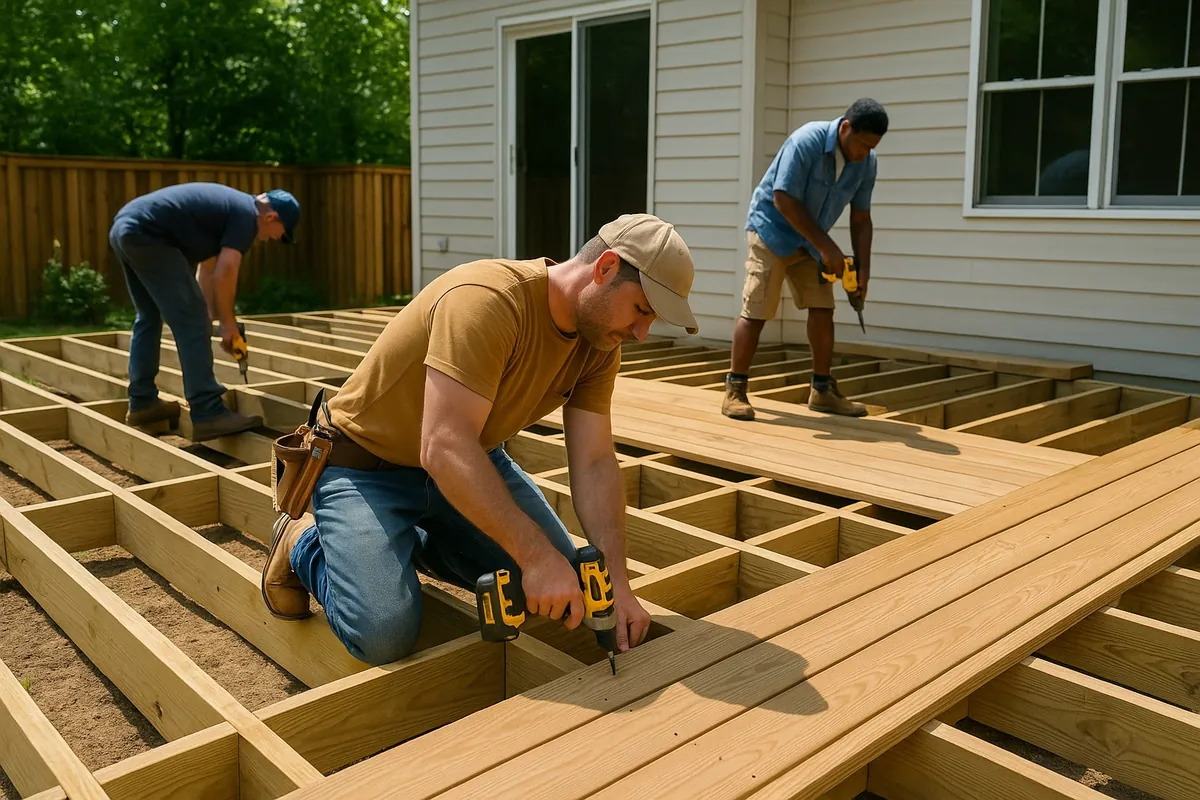
- Size and height. Boards and joists scale with area; height adds 6x6 posts, deeper footings, bracing and stairs. A second-storey walkout deck costs roughly a third more than the same deck at ground level.
- Decking material. Pressure-treated lumber is the base price. Cedar adds about 30 percent, composite about 60 to 100 percent, and PVC or IPE hardwood roughly doubles the material line. Our decking materials comparison covers the trade-offs.
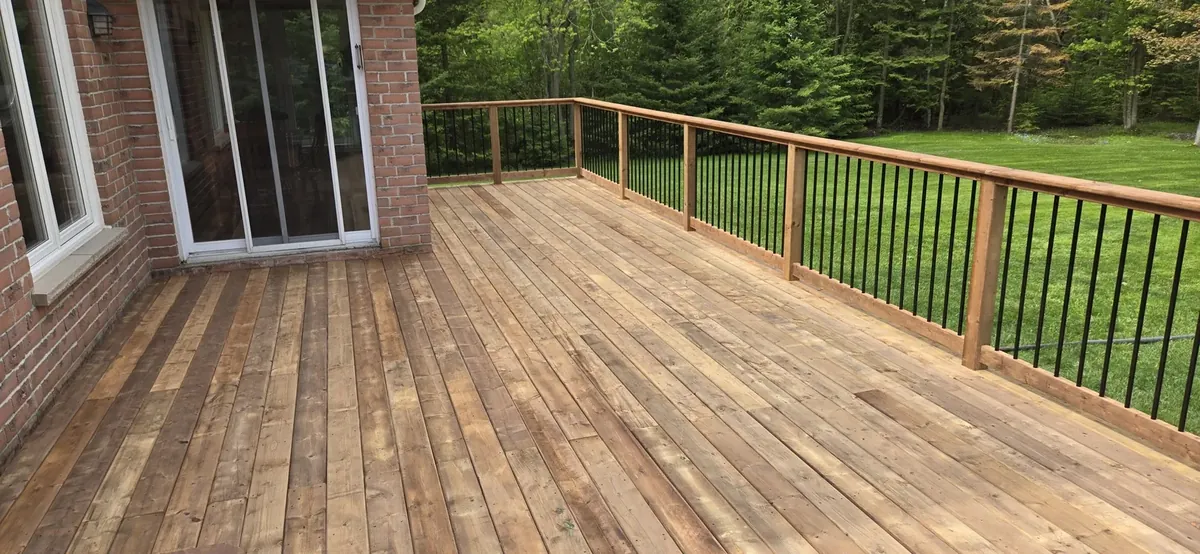
- Railings. Wood balusters are included in the base range. Black aluminum adds a few thousand dollars on a typical deck; glass panels add more.
- Permits and drawings. Permit fees are set by each town and change yearly, so we quote them at cost. Engineered drawings, needed for roofs and some tall decks, are a separate line.
- Site access and soil. A yard a truck can reach costs less to build in than one where every board is carried through a gate. Rock, sand or a high water table changes the footing method.
Deck Cost Ranges by Town
Ranges run from a straightforward pressure-treated deck to a large composite or hardwood build with stairs and upgraded railings.
| Town | Typical range | What moves the price locally |
|---|---|---|
| Newmarket | $30 to $70 per sq ft | Walkout lots north of Davis Drive push most builds into the elevated range. |
| Aurora | from $8,000 to $12,000 for a basic pressure-treated deck | Permit applies over 24 in high or 108 sq ft; older lots in the core often have tight access. |
| Richmond Hill | $9,000 to $40,000+ | Every deck is permitted and inspected three times; brick veneer ledgers need extra detailing. |
| Vaughan | $8,000 to $12,000 basic; $20,000 to $45,000+ composite or multi-level | Grading permits on some lots and TRCA review near ravines add time and drawings. |
| King City | $10,000 to $45,000+ | Estate lots mean larger decks; every deck needs a permit under By-law 2025-068. |
| Nobleton | $10,000 to $40,000+ | Same Township of King permit rules; Oak Ridges Moraine lots may need extra approvals. |
| Bradford | $8,000 to $30,000+ | Newer subdivisions have good access; LSRCA review applies near the marsh and river. |
| Keswick | $8,000 to $35,000+ | Waterfront lots need LSRCA sign-off and pier footings rather than deck blocks. |
| Kawartha Lakes | $8,000 to $35,000+ | Travel and lake-lot access; permit required from 0.6 m above grade. |
| Muskoka | $12,000 to $60,000+ | Rock footings, shoreline setbacks and material delivery by road or water. |
Common Add-ons and What They Cost
- Stairs to grade: a straight run with guards usually adds $1,500 to $4,000 depending on height and width.
- Privacy screen: a slatted pressure-treated screen runs a few hundred dollars per linear foot; see fence and privacy screen installation.
- Low-voltage lighting: post caps, stair lights and a transformer typically add $1,200 to $3,500; details on our deck lighting page.
- Pergola over the deck: a cedar or pressure-treated pergola starts around $6,000 and rises with size and slat spacing.
- Removing the old deck: demolition and disposal is quoted by size; see deck replacement and removal.
How to Get an Accurate Number
A range is only a starting point. For a firm quote we visit the site, measure door sill heights and grade, check the town’s permit threshold and any conservation authority mapping, and draw the deck to scale. The quote lists every line, so a change in material or railing changes one number and nothing else. Book a site visit and you will have the drawing and the price within a few days.
Frequently Asked Questions
Is composite worth the extra cost over pressure-treated?
For a deck you plan to keep 15 years or more, usually yes. Composite skips the staining every two or three years and does not split or check. Our composite vs wood guide runs the numbers over a deck’s life.
Does the permit fee come out of the deck budget?
We quote permit fees at the town’s published rate and list them separately, so you can see exactly what goes to the municipality. Drawings and inspections are included in our labour.
Why is the same deck cheaper in Bradford than in Muskoka?
Access, footings and travel. A subdivision lot in Bradford has a driveway for the lumber delivery and soil that takes a standard concrete pier. A Muskoka lot may need rock-anchored footings, a longer drive for every load and shoreline approvals.