
PVC and composite decking are both durable alternatives to traditional wood. PVC boards offer superior moisture resistance and longevity, while composite decking provides a natural wood appearance with balanced durability and lower upfront cost.
Choosing the right decking material often depends on how your outdoor space is used throughout the year. Decks here face snow buildup, spring thaw moisture, and strong summer sun, which can affect board performance over time. Materials like polyvinyl chloride decking and wood-plastic composite boards respond to these conditions in different ways.
When evaluating PVC vs composite decking, it becomes easier to decide which material will deliver the durability, appearance, and maintenance level your backyard needs. Read on to see how PVC and composite decking truly compare.
What is PVC Decking?
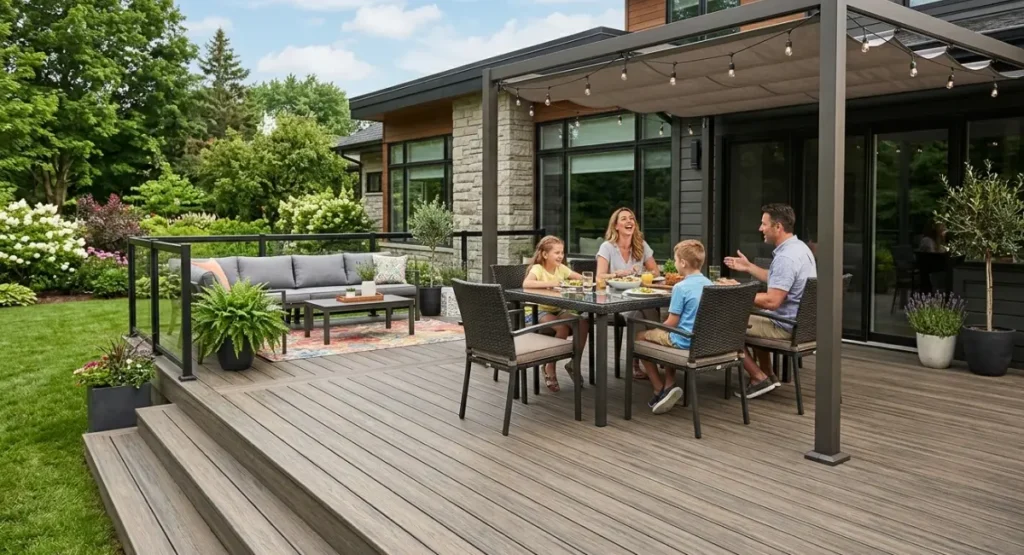
PVC decking is a synthetic decking material made from polyvinyl chloride (PVC). These deck boards contain no wood fibers, which makes them highly resistant to moisture, rot, and insect damage.
PVC deck boards use a cellular PVC core with a protective cap layer that blocks water absorption. This structure improves durability in wet conditions. In areas like Newmarket, decks face snow, rain, and freeze–thaw cycles throughout the year. PVC boards handle these conditions well because they resist swelling, mold growth, and surface fading. Manufacturers also add UV inhibitors and scratch-resistant coatings to extend lifespan.
What is Composite Decking?

Composite decking is a manufactured decking material made from a blend of recycled wood fibers and plastic polymers. These boards provide the look of natural wood while offering stronger durability and lower maintenance.
Composite deck boards use a wood-plastic composite (WPC) core covered with a protective cap layer. This outer layer improves resistance to moisture, stains, fading, and scratches. For many homeowners, this means less sanding, sealing, or staining over the years. Many homeowners choose composite decking when they want a durable deck that stays attractive with minimal upkeep.
PVC vs Composite Decking: A Quick Comparison Table
Before exploring each factor in detail, the table below highlights the key differences between PVC and composite decking across the most important performance and installation factors.
| Factor | PVC Decking | Composite Decking |
| Material Composition | Made from 100% polyvinyl chloride (PVC) with no organic fibers | Made from wood-plastic composite using recycled wood fibers and plastic polymers |
| Durability | Highly resistant to moisture, rot, and insects | Durable, but wood fibers can absorb small amounts of moisture over time |
| Lifespan | Typically 30–40 years with minimal structural deterioration | Usually lasts 25–30 years with proper maintenance |
| Maintenance | Requires simple cleaning; no sanding or staining needed | Low maintenance, but periodic cleaning prevents surface buildup |
| Appearance | Smooth, modern finish with consistent color tones | Natural wood-grain textures and multi-tone color variations |
| Weight | Lightweight boards due to cellular PVC construction | Heavier boards because of dense composite core |
| Moisture Resistance | Fully waterproof and ideal for wet environments | Water-resistant but not completely waterproof |
| Environmental Impact | Synthetic material with a long lifespan but energy-intensive manufacturing | Uses recycled wood fibers and plastics, reducing landfill waste |
| Cost Range (Installed) | Generally higher material cost due to synthetic composition | Slightly lower price because of the blended material structure |
PVC vs Composite Decking: A Detailed Comparison
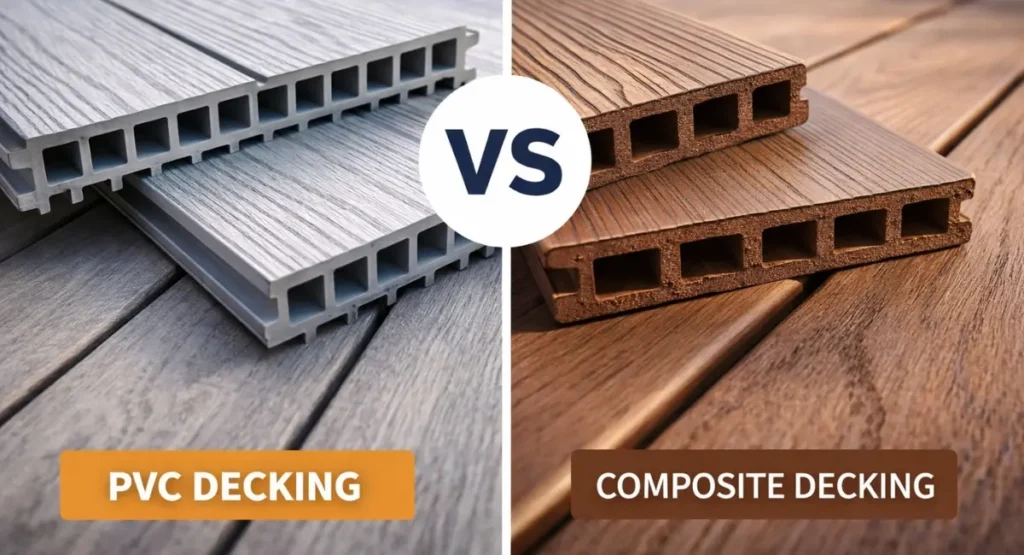
PVC decking is fully synthetic, lightweight, waterproof, and highly resistant to mold and rot. Composite decking blends wood fibers and plastic, offering a more natural look with stronger density at a lower cost.
1. Cost Comparison
PVC Decking
PVC boards are typically the premium option. In Southern Ontario, installed prices often range from $90 to $130 per square foot. Homeowners comparing pvc decking vs composite decking cost often notice PVC costs more because the boards use solid polyvinyl chloride and protective cap layers.
Composite Decking
Composite decking usually costs $70–$110 per square foot installed in York Region deck projects. The boards combine recycled wood fibers and polymer resins, making them slightly more affordable. Many homeowners researching composite decking cost per square foot choose composite decking for its balance of durability and price.
2. Maintenance Requirements
PVC Decking
PVC decking requires minimal upkeep because the boards contain no organic wood fibers. The polyvinyl chloride core prevents water absorption, mold growth, and rot. In Newmarket’s humid summers and wet spring seasons, homeowners usually clean PVC decks with mild soap and water once or twice yearly.
Composite Decking
Composite decking also offers low-maintenance performance, but the wood-plastic composite core can retain surface debris if not cleaned regularly. In Southern Ontario’s freeze–thaw climate, leaves, snowmelt, and pollen may accumulate. Most homeowners wash composite decks once or twice per year to prevent staining and maintain color.
3. Durability and Lifespan
PVC Decking
PVC decking offers excellent durability because the boards contain no organic wood fibers. In Southern Ontario, decks face snow accumulation, spring thaw moisture, and frequent freeze–thaw cycles. PVC boards resist water absorption, which helps prevent cracking, swelling, and structural deterioration over time. Most PVC decks last 30–40 years with minimal performance loss.
Composite Decking
Composite decking uses wood-plastic composite boards that combine recycled wood fiber and polymer resin. These boards perform well in Ontario’s changing climate, but the organic fibers can absorb small amounts of moisture. With proper installation and ventilation, composite decks usually last 25–30 years in Newmarket’s seasonal weather conditions.
4. Appearance and Design Options
PVC Decking
PVC decking creates a clean, modern look because boards are manufactured from solid polyvinyl chloride with a protective cap layer. Many products feature smooth textures and lighter colours that reflect heat. In newer Newmarket subdivisions, homeowners choosing the best PVC decking boards often prefer these finishes for pool decks, patios, and contemporary outdoor living spaces.
Composite Decking
Composite decking delivers a warmer, natural appearance because boards contain recycled wood fibres blended with polymer resin. Manufacturers emboss wood-grain textures and multi-tone colours that resemble cedar or hardwood. Homeowners comparing composite vs. PVC decking often choose composite when designing traditional backyard decks attached to walkout basements, common in York Region homes.
5. Weight and Installation Difficulty
PVC Decking
PVC decking boards are lighter because they use cellular polyvinyl chloride construction with no wood fibers. Builders comparing pvc vs composite deck boards often find PVC easier to lift and position on deck framing. However, installers must leave expansion gaps because temperature swings and freeze–thaw cycles in Southern Ontario cause noticeable thermal movement.
Composite Decking
Composite boards are heavier due to their wood-plastic composite core made from recycled wood fibers and polymer resins. This density improves stability on joists, beams, and pressure-treated deck framing, which many contractors prefer for raised backyard decks. However, the additional weight can increase labour effort and affect overall composite decking installation cost on larger projects.
6. Environmental Impact
PVC Decking
PVC decking uses polyvinyl chloride polymer, a fully synthetic material produced through energy-intensive manufacturing. However, the boards resist moisture, rot, and insect damage. In Southern Ontario’s freeze–thaw climate, this durability reduces replacement waste. Professional builders also combine PVC boards with deck waterproofing systems to protect the structure below.
Composite Decking
Composite decking uses recycled wood fibers and recycled polyethylene plastics, forming a wood-plastic composite core. This process repurposes sawdust and plastic waste from manufacturing streams. Many products promoted as best composite decking material contain high recycled content, reducing landfill disposal and pressure on natural lumber resources.
PVC vs Composite Decking: Pros and Cons
PVC decking performs best where moisture resistance and minimal maintenance matter most. Because the boards contain 100% polyvinyl chloride, they resist mold, rot, and insect damage even in humid climates.
| Pros of PVC Decking | Cons of PVC Decking |
| Completely waterproof decking material Highly resistant to mold, rot, and insects Lightweight boards for easier installation Very low maintenance; no staining required | Typically, higher material cost Can expand more with temperature changes Appearance may look less natural than wood Fewer natural wood-grain design options |
Composite decking balances natural appearance and durability by combining recycled wood fibers with polymer plastics. This structure creates strong boards that resemble traditional wood decking while reducing maintenance needs.
| Pros of Composite Decking | Cons of Composite Decking |
| Natural wood-grain appearance Made from recycled wood fibers and plastics Durable surface with fade-resistant decking boards Wide range of colors and textures | Heavier boards during installation Can absorb small amounts of moisture if poorly ventilated May require periodic cleaning Slightly shorter lifespan than premium PVC |
PVC vs Composite Decking: Which Should You Choose?
Both materials work well for modern backyard decks. The better choice depends on how your deck will be used, how much maintenance you prefer, and how the material performs through Ontario’s seasonal weather.
When Should You Choose PVC Decking
PVC decking works best when moisture and long-term durability are the biggest concerns.
- If your deck sits near a pool or hot tub, PVC boards handle constant water without absorbing moisture.
- When your backyard sees snow buildup and spring thaw runoff, common across Southern Ontario, PVC resists swelling and rot.
- If you want to keep the space below dry, pairing PVC boards with deck waterproofing helps protect framing and joists.
- For taller decks, lighter polyvinyl chloride boards are easier for installers to position.
- If you prefer a deck you can quickly rinse and enjoy, PVC reduces long-term maintenance work.
When Should You Choose Composite Decking
Composite decking often fits better when appearance and balanced durability matter.
- If you want the deck to match cedar fences, pergolas, or garden landscaping, composite boards provide a natural wood-grain look.
- Many homes in Newmarket and York Region have walkout basement decks for family gatherings, where composite textures feel warmer.
- When planning built-in seating, deck railing, and benches installation helps create a comfortable outdoor space.
- If you’re comparing composite decking vs. PVC price, composite often offers a balanced cost-to-durability option.
- For homeowners wanting the look of wood with less upkeep, wood-plastic composite boards provide that middle ground.
In Closing
Choosing between PVC vs composite decking ultimately depends on how you want your deck to perform over time. Consider factors like long-term maintenance, climate durability, and installation cost before deciding.
Materials that resist moisture and fading usually perform better through seasonal weather changes. If you’re planning a new deck and want expert guidance, the team at XP Decking can help you select the right material and build a deck that fits your backyard perfectly. Contact us today to start planning your project.
1. Does PVC or composite decking get hotter in the sun?
PVC and composite boards can both warm up under direct sunlight. Lighter colours and good airflow around the deck surface help reduce heat retention.
2. Can PVC or composite decking be installed over an existing deck frame?
Yes, but the existing deck framing, joists, and fasteners must be structurally sound. Builders usually inspect spacing and support before installing new boards.
3. Do PVC and composite decks require special fasteners?
Most installations use hidden deck fastener systems designed for synthetic boards. These fasteners allow proper spacing and create a smooth deck surface without visible screws.
4. How often should PVC or composite decking be cleaned?
Cleaning once or twice a year is usually enough. A simple rinse with water and mild soap removes pollen, dirt, and seasonal debris.