
Composite decks typically last 25–30 years or more when installed correctly and maintained properly. Their capped polymer surface and moisture-resistant core protect against rot, insects, and long-term weather exposure better than traditional wood decking.
If you’re planning a new backyard deck or replacing an aging one, lifespan quickly becomes a major concern. Most homeowners want a deck that handles daily use, seasonal moisture, and temperature swings without constant repairs.
Composite decking was designed exactly for that. Its engineered structure resists warping, cracking, and decay while reducing maintenance demands. If you’re evaluating decking materials or planning a rebuild, understanding what affects deck longevity is essential. Read on to learn what really determines how long do composite decks last.
How Long Does a Composite Deck Last?
Many homeowners ask how long composite decking lasts before investing in a new outdoor deck. In most residential settings, composite decks typically last 25–30 years or more. Decks built with high-quality composite boards, strong deck framing, and proper installation can maintain performance for decades with minimal maintenance.
Composite decking is engineered using wood-plastic composite materials and protective polymer caps. These layers resist moisture penetration, insect damage, and surface deterioration. Unlike traditional lumber, composite boards do not absorb water through natural fibers.
Because of this design, composite decks handle seasonal moisture, temperature changes, and repeated freeze–thaw cycles much better than wood. Over time, this stability helps protect deck boards, fasteners, and structural components, which is why many homeowners choose composite decking for long-lasting outdoor living spaces.
Major Factors Influencing Composite Deck Longevity
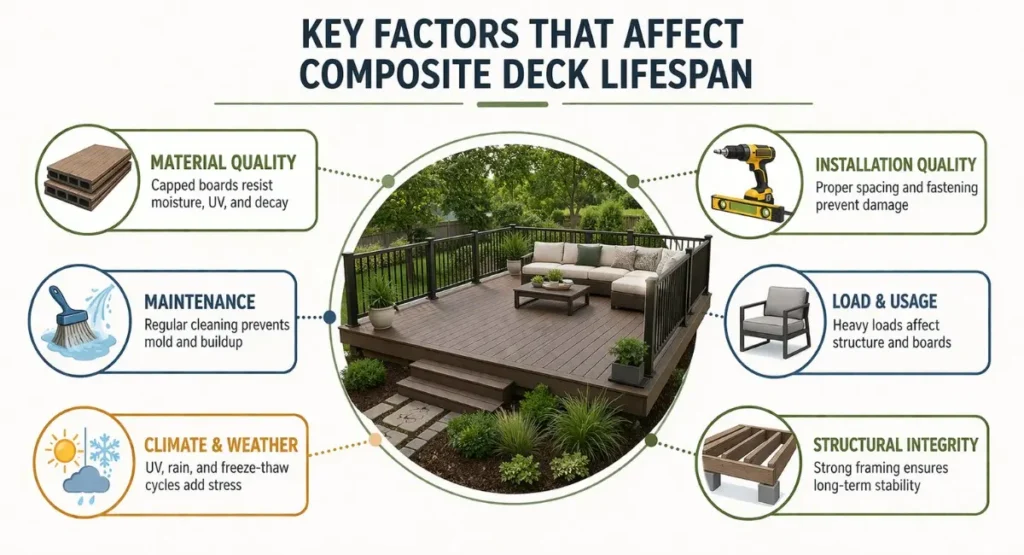
Composite deck longevity depends on several structural and environmental factors. Material quality, deck framing stability, installation accuracy, moisture exposure, UV radiation, freeze–thaw cycles, drainage design, and ventilation all influence long-term performance. Structural components such as deck joists, support beams, ledger boards, and fastening systems also play a major role in maintaining deck stability over time.
Quality of Materials
Material quality strongly influences composite decking durability. High-grade boards use recycled wood fibers, polymer resins, and a protective capped shell. This engineered structure helps resist moisture penetration, UV exposure, mold growth, and freeze–thaw cycles, allowing composite boards to maintain structural strength and surface appearance for many years.
Installation Quality
Installation quality directly affects composite deck lifespan. Improper joist spacing, weak deck framing, or missing expansion gaps can create stress on composite boards. Over time, this stress may cause movement, board deformation, or fastener failure. Professional deck design and installation ensure correct structural spacing, drainage planning, and fastening systems to support long-term durability.
Maintenance Practices
Although composite decking requires less maintenance than wood, basic care still affects its lifespan. Dirt, pollen, and organic debris can accumulate between composite deck boards, trapping moisture on the surface. Regular cleaning helps maintain proper drainage, improves composite decking’s weather resistance, and prevents mold or staining.
Load and Usage
Deck usage also influences long-term performance. Heavy outdoor furniture, grills, planters, or hot tubs can create concentrated loads on deck joists, support beams, and fastening systems. When pressure is unevenly distributed, boards may flex over time, which gradually reduces composite deck board durability and structural stability.
Climate and Weather Exposure
Composite decks remain exposed to outdoor conditions year-round. Rain, snow accumulation, UV radiation, and repeated freeze–thaw cycles cause materials to expand and contract. While composite boards are designed to handle these conditions, extreme temperature fluctuations can still place stress on the board core, polymer cap, and fastening systems.
Structural Integrity
Even the most durable composite boards rely on a strong underlying structure. Stable deck framing, correct joist spacing, and properly secured ledger boards help maintain long-term deck performance. If the structural framing weakens or shifts, boards may move or loosen. In older decks, deteriorated framing may require deck replacement and removal before installing new composite decking.
Composite vs Wood Lifespan Comparison
When homeowners compare materials, the biggest question is lifespan. In most outdoor conditions, composite decking lasts significantly longer than traditional wood decking because composite boards resist moisture, rot, and insect damage.
Below is a simple comparison to help you understand the difference.
| Feature | Composite Decking | Wood Decking |
| Typical Lifespan | 25–30+ years with stable performance | 10–15 years, depending on wood type |
| Moisture Resistance | High resistance due to the polymer shell and sealed core | Absorbs moisture through wood fibers |
| Rot & Mold Risk | Low risk because the composite resists organic decay | High risk without sealing and regular maintenance |
| Freeze–Thaw Performance | Stable under temperature expansion cycles | Wood expands and cracks over time |
| Maintenance Needs | Low-maintenance outdoor decking | Requires sealing, staining, and repairs |
| Structural Stability | Boards maintain shape with hidden fasteners | Wood boards warp and split over time |
Signs That a Composite Deck Is Aging
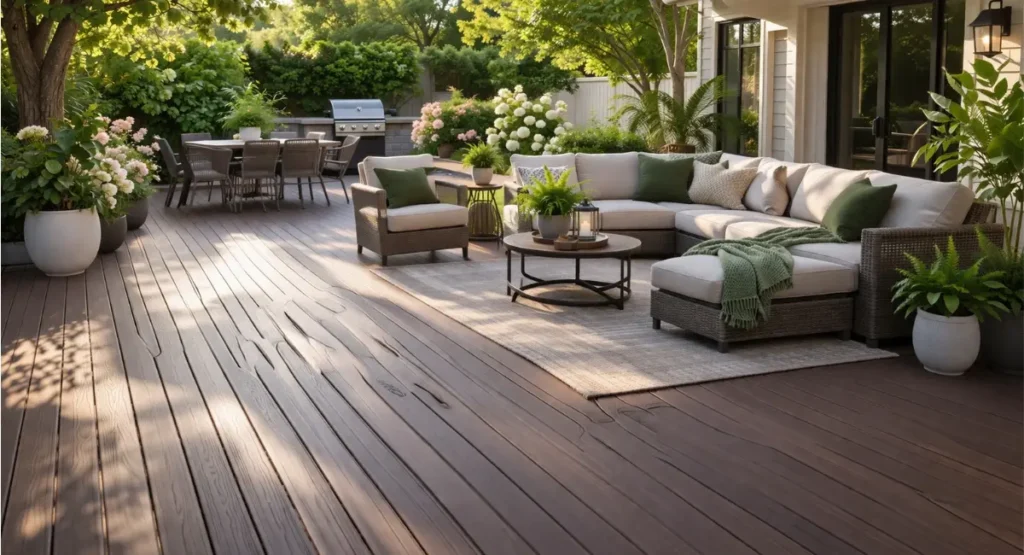
Most composite decks last 25–30 years, but aging signs appear gradually as boards face UV exposure, moisture cycles, and structural loads. These changes indicate the lifespan of composite deck boards progressing.
Common signs include:
- Gradual color fading as UV exposure weakens fade-resistant composite decking protection.
- Surface scratches or wear patterns from repeated foot traffic.
- Slight board movement when hidden fasteners loosen after expansion cycles.
- Minor edge cracking along high-traffic board ends.
- Surface staining where trapped debris lowers the composite decking’s weather resistance.
- Board flexing under load as the composite deck board’s durability slowly declines.
- Visible gaps are widening between boards during seasonal expansion and contraction.
How Often Should Composite Decks Be Replaced?
If you have a composite deck, you may wonder when replacement becomes necessary. In most cases, composite decks last 25–30 years or more when installed correctly and supported by strong framing.
You may notice gradual signs of aging over time, such as surface fading, light wear, or minor fastener movement. However, the deck’s lifespan also depends on structural components like deck joists, ledger boards, and support beams.
If the underlying framing weakens, homeowners often rebuild the structure and upgrade features like deck railing and bench installation while installing new composite boards.
Is Composite Decking Worth the Investment?
Yes, composite decking is worth the investment for many homeowners because it lasts longer, requires less upkeep, and resists rot, moisture, and insect damage better than traditional lumber decking.
Composite boards combine wood plastic composite decking boards with recycled wood fiber decking boards and durable polymer binders. This construction reduces long-term repair costs. Composite decking becomes a strong investment when homeowners want:
- low maintenance composite decking without yearly sealing or staining
- durable composite deck boards that resist moisture and structural decay
- better long-term performance and lower composite decking long-term cost
Professional Tips to Make a Composite Deck Last Longer
Many homeowners ask how to make composite decking last longer. The answer is simple: proper installation, regular care, and smart structural planning. When these practices are followed, composite deck life expectancy increases significantly.
Keep the deck surface clean
If you’ve noticed dirt building between boards, clean it early. Leaves, pollen, and organic debris trap moisture between composite deck boards. Routine washing helps meet composite decking maintenance requirements and prevents long-term staining.
Maintain proper drainage
Water should never sit on decking boards. Ensure board spacing and drainage gaps allow water to flow off the deck surface. Good drainage protects the lifespan of capped composite decking and prevents moisture buildup beneath boards.
Spread the heavyweight evenly
Think about how your deck is used. Large seating sets, planters, or hot tubs create concentrated loads. Distributing weight across framing helps maintain durable composite deck boards and reduces long-term structural stress.
Plan for temperature movement
Composite boards expand and contract with seasonal temperatures. Proper joist spacing, expansion gaps, and concealed fasteners allow controlled movement. These details improve composite decking freeze-thaw durability during seasonal temperature changes.
Work with experienced professionals
Installation quality often determines how long your deck performs. Experienced builders understand framing loads, drainage design, and fastening systems. Many homeowners rely on composite deck builders Newmarket like XP Decking for durable, well-built outdoor decks.
Conclusion
So, how long do composite decks last? In most cases, a well-built composite deck can perform reliably for 25–30 years or longer when installed correctly and maintained properly. Choosing quality materials and proper structural design makes a big difference in long-term performance.
If you’re planning to upgrade your outdoor space or rebuild an aging deck, working with experienced professionals can help maximize durability. The team at XP Decking specializes in designing and installing long-lasting composite decks. Contact us to start planning your next backyard project.
1. Does composite decking fade over time?
Yes, slight fading can occur during the first months of exposure. However, modern boards use UV stabilizers and protective caps that significantly reduce long-term color loss.
2. Can composite decking crack or warp?
Composite boards rarely crack or warp like wood. Their engineered core and polymer shell help them maintain structural stability under normal temperature changes.
3. Do composite decks attract mold or mildew?
Composite decking resists mold better than wood. Mold can still grow on trapped debris, so occasional cleaning keeps the surface looking new.
4. Is composite decking safe for high-traffic outdoor spaces?
Yes, composite boards are designed for durability. They handle frequent foot traffic well while maintaining surface strength and structural stability.